What is a loyalty program? Definition, how it works, and examples (2025)
Share
What is a loyalty program? Simple explanation & examples
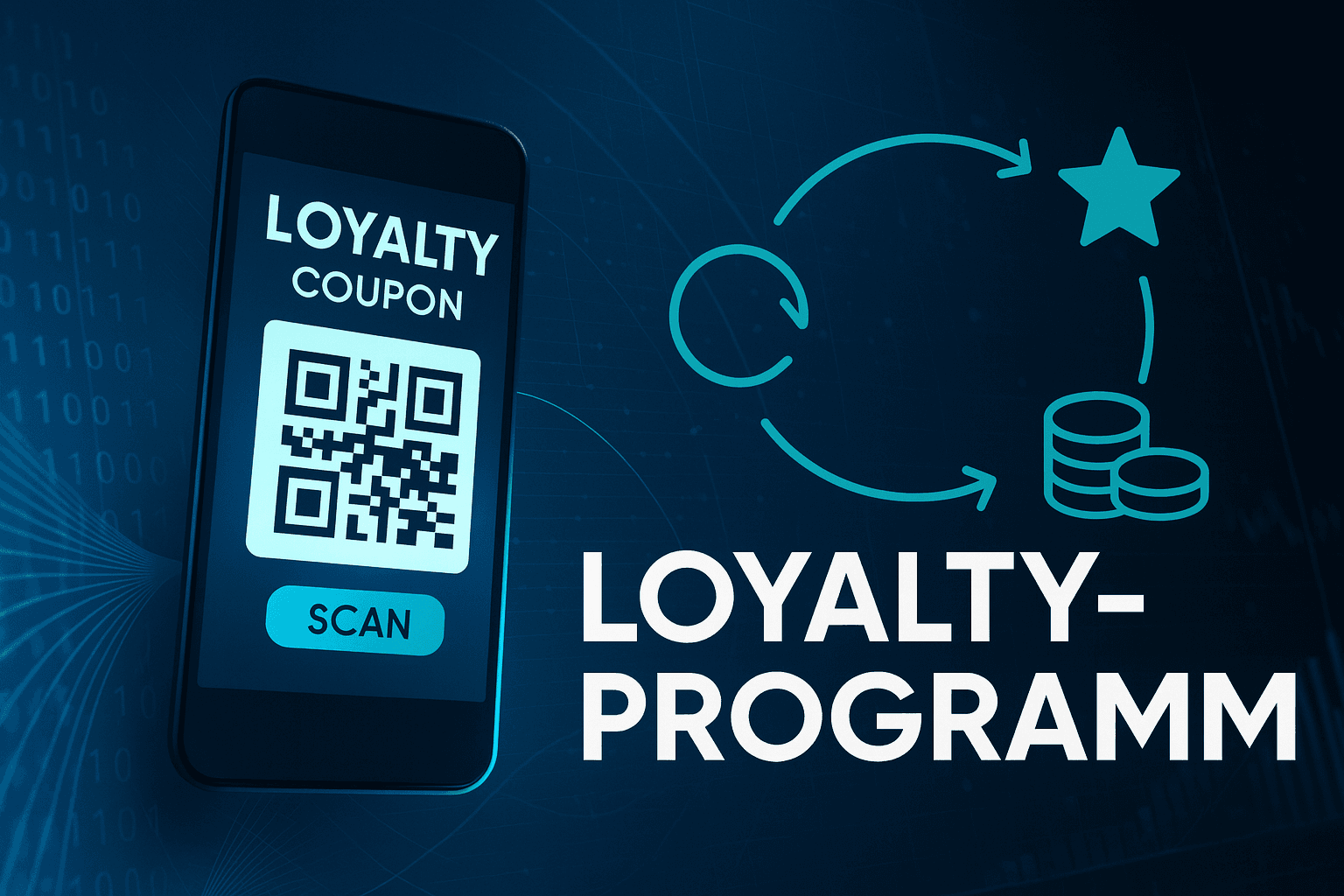
A loyalty program is a structured system that companies use to reward customers for repeat purchases or interactions in order to build long-term loyalty.
Loyalty programs are now one of the most important tools for modern customer retention. They combine emotional attachment with data-driven marketing and transform one-time purchases into lasting relationships. By recognizing behavior, responding to it in a targeted manner, and tailoring benefits to the individual, they create a consistent brand experience across all channels.
This makes loyalty measurable and controllable. Not as a short-term sales promotion, but as a strategic element of sustainable customer retention.
In this article, you will learn how loyalty programs work, what models are available, and how they fit into the context of modern customer retention.
Definition and Origins
A loyalty program, or in German Kundenbindungsprogramm, is a marketing strategy that uses structured systems to strengthen and reward the loyalty of existing customers. In German, the term is often used interchangeably with Treueprogramm (loyalty program), Bonusprogramm (bonus program), or Kundenbindungsprogramm (customer retention program).The concept is older than many think. As early as the 19th century, merchants handed out stamps or collector cards that customers could redeem after repeated purchases. In the 1980s, airlines professionalized this principle with frequent flyer programs like "Miles & More." Later, retailers followed with point systems and club models. Today, digital platforms, apps, and data analytics drive the ongoing evolution of such programs.
Purpose and Benefits of Loyalty Programs
The core purpose of a loyalty program is the long-term retention of existing customers. It's not just about triggering the next purchase — it’s about building trust and encouraging recognition.Companies use loyalty programs to understand and influence behavior. Customers who purchase or interact regularly receive benefits tailored to their behavior. This creates a personal experience that goes beyond simple discounts.Another key benefit lies in data usage. Every transaction delivers insights into preferences, buying patterns, and touchpoints. These data form the basis for personalized communication, more relevant offers, and better customer value predictions. This makes loyalty measurable and strategically manageable.
How Does a Loyalty Program Work?
Loyalty programs are based on a simple principle: those who engage regularly with a brand are rewarded. Companies create incentives that encourage customers to return while providing valuable data at the same time.Loyalty programs usually follow the same basic mechanisms: collecting points, moving up tiers, enjoying exclusive perks, or joining memberships.
Basic Principles
Every loyalty program follows the same structure. Customers first sign up — usually via an app, website, or directly at the point of sale. This creates a unique profile that assigns purchases, interactions, and preferences.Data is collected via this profile — for example, what someone buys, how often they’re active, or which offers they respond to. Based on this, a system of rewards is created. Points, tiers or status levels reflect the degree of loyalty. The more interactions a customer has, the more attractive the benefits become. Rewards can include discounts, exclusive products, early access to promotions or personal invitations. What matters most is that the customer experiences a direct benefit and perceives the brand connection as worthwhile. A well-structured program creates habits and strengthens emotional loyalty.
The Loyalty Lifecycle
A loyalty lifecycle describes the recurring sequence through which customers join the program, remain active, and become long-term loyalists.
- EnrollmentThe customer registers and receives an initial incentive, such as welcome credit or bonus points.
- InteractionWith each purchase, referral, or activity, their points or status increase. The customer sees that engagement pays off.
- RewardCollected points or status benefits are redeemed. The customer immediately experiences the program’s value, deepening the emotional connection to the brand.
- Retention and ReactivationPositive experiences promote repetition. The customer stays active, participates in new campaigns, and restarts the cycle — with each interaction, the relationship deepens and the value of the data increases.
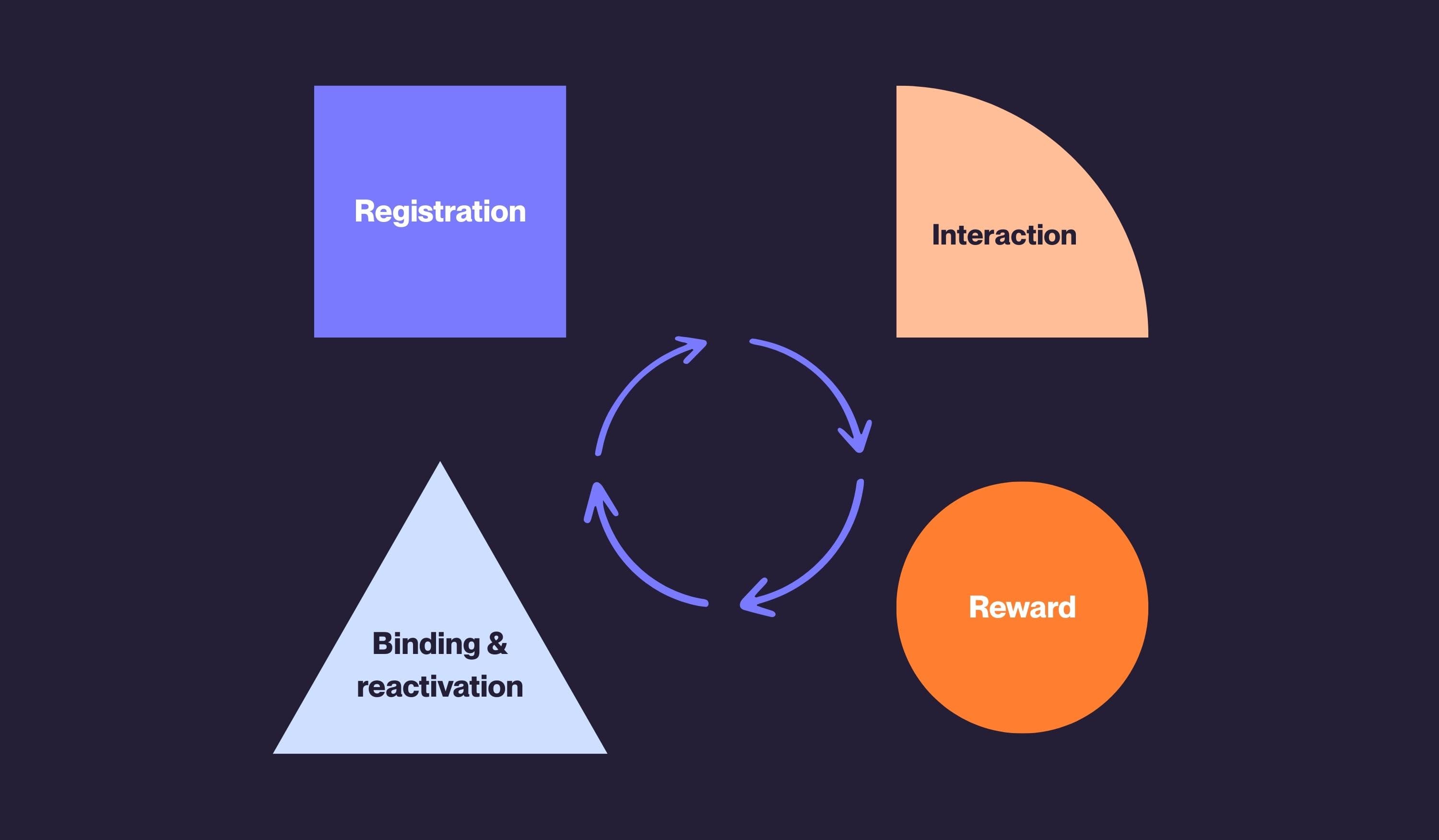
This cycle repeats continuously. Through regular communication, personalized offers, and targeted campaigns, the program remains dynamic. Successful companies use this cycle to measurably increase customer loyalty while deepening their understanding of target groups.
Types and Models of Loyalty Programs
Loyalty programs can be divided into different models. These differ in how customers collect benefits, what incentives they receive, and how strongly the brand relationship is developed. Choosing the right model depends on the business model, data goals, and the desired depth of customer engagement.
Points-Based Systems
The points-based model is the most well-known form of loyalty program. Customers collect points for each purchase or activity, which they can later redeem. This principle works because it is simple and easy to understand. Progress is visible, and the benefit is clear.Examples such as Payback or IKEA Family show how successful this model can be. It motivates through a clear reward logic and enables the collection of valuable customer data. Companies gain insight into which products are popular, how frequently customers shop, and how their behavior evolves over time.
Tier / Status Models
Tier models, often called status programs, work with different levels of loyalty. Customers move up to higher categories through activity or spend. Each tier brings additional benefits such as premium support, exclusive events, or early access to new offers.This model leverages psychological mechanisms like progress and recognition. It appeals especially to customers who want to visibly improve their status. Airlines, hotels, and many e-commerce platforms use it because it creates long-term motivation.Many of these programs also incorporate gamification elements such as progress bars, challenges, or badges to further increase motivation and engagement.
Membership or Club Models
Membership programs offer access to special benefits, often in exchange for a fee or regular activity. They create a sense of belonging and foster community. Programs like Amazon Prime or Sephora Beauty Insider demonstrate how strong customer loyalty becomes when customers feel like part of an exclusive circle.The perceived value often exceeds the actual cost. The brand positions itself as a companion — not just a seller.
Partner and Coalition Programs
Coalition programs combine several brands into a shared loyalty system. Customers can collect and redeem points across different partners. This creates a network that is attractive to broad target groups and increases the reach of all participating brands.A well-known example is DeutschlandCard, where purchases at various retailers are consolidated in a shared account.For companies, this model provides access to new customer groups; for participants, the extended benefit lies in the flexible use of their points.Each of these models pursues the same goal: long-term, data-driven customer relationships. What matters is that the chosen system fits the brand, customer behavior, and strategic goals.
Benefits of Loyalty Programs for Companies
Loyalty programs increase customer retention, repeat purchase rates, and profitability. They connect emotional attachment with data-driven marketing and make relationships measurable in the long term. Companies that systematically build loyalty achieve demonstrably more stable revenue and lower acquisition costs.
Key Benefits for Businesses:
- Higher customer retention
- Valuable customer data
- Competitive differentiation
- Increased profitability
Boosting Customer Loyalty and Repeat Purchase Rates
Loyalty programs drive repeat purchases by creating incentives for ongoing brand interaction. Customers who experience benefits develop trust and stay engaged longer. This increases Customer Lifetime Value (CLV) — the total value of a customer over the course of the relationship.Reichheld and Sasser (1990) found that “an improvement in customer retention rate by 5% can increase profitability by 25% to 85%, depending on the industry.”Loyal customers respond more to relevance than to discounts, are more likely to try new offers, and contribute to stable revenue over time. This makes customer retention a critical growth factor.
Data Depth and Personalization
A loyalty program delivers high-quality first-party data, offering insights into behaviors, preferences, and purchase patterns.In a phase of declining cookie availability, these data are essential for personalized communication. According to McKinsey, companies that fully implement personalization generate 40% more revenue from these activities than the industry average.Those who actively leverage loyalty data can predict behavior, dynamically adapt offers, and manage customer relationships with precision. Personalization thus becomes a core competency in customer retention, not just a marketing tactic.
Economic Value and ROI
Loyalty programs create financial stability by maximizing the value of existing customers. Acquiring new customers is significantly more expensive than retaining current ones.According to various market analyses, acquisition costs are on average five to seven times higher than retention efforts. An established program reduces reliance on costly new customer campaigns.Customers who return regularly provide predictable revenue and more stable cash flow. At the same time, the effort for sales and marketing decreases, as less budget is spent on short-term promotions.Repeat purchase rates rise because loyal customers buy more frequently and are less price-sensitive. This creates a more reliable earnings base, making companies more resilient to market fluctuations.
Examples of Successful Loyalty Programs
Successful loyalty programs stand out through simple mechanics, recognizable benefits, and consistent customer experiences. They build emotional loyalty, collect actionable data, and adapt to individual needs.Current developments and innovations in this area are summarized in our article on Loyalty Trends 2025.
International Examples
Some of the best-known loyalty programs worldwide come from brands that connect customer loyalty with digital experiences and personalized benefits.
- Starbucks RewardsThis program is considered a benchmark for app-based customer loyalty. Users collect stars with every purchase, which can be exchanged for free products. Particularly successful is the app integration: payments, personalization, and rewards are fully connected. Starbucks uses the collected data to control offers, product placements, and campaigns by location.
- Sephora Beauty InsiderSephora combines a classic tier logic with emotional loyalty. Members move up through three levels — Insider, VIB, and Rouge — and receive escalating benefits like exclusive products, invites, or makeup sessions. The program builds strong brand affinity through status dynamics and a sense of community.
- Amazon PrimePrime stands for paid loyalty: customers pay for benefits like faster shipping, streaming, and exclusive deals. The combination of convenience, content, and added value binds over 200 million members worldwide. High usage frequency makes Prime a central part of buying behavior.
German Examples
In Germany, major retail and service brands shape the market with established, data-driven loyalty programs.
- PaybackOne of the largest multi-partner programs in Europe. Customers collect points at numerous partners — from supermarkets to gas stations — and redeem them online or offline. Payback stands out for its reach, simplicity, and data-driven personalization via app and email marketing.
- DeutschlandCardA similar coalition program focused on brick-and-mortar retail. Customers collect and redeem points across multiple brands in the same way. This collaboration generates extensive data on purchasing behavior, which is used for targeted regional campaigns.
- Miles & MoreLufthansa’s frequent flyer program is a prime example of status-based loyalty. Members collect miles for flights and everyday purchases. From certain point levels, they receive benefits like lounge access or upgrades. The psychological value of status motivates long-term participation.
- dm GlückskindTargeted at families, this program combines traditional discount mechanisms with relevant content. Users receive personalized coupons, product recommendations, and tips around family and baby care. The link between utility and life phase builds trust and relevance.
- Lidl PlusA digital loyalty program with app integration. Users receive coupons and personalized offers based on their purchase behavior. This program demonstrates how loyalty mechanics can be integrated into the discount retail segment.
Analysis of Successful Mechanisms
All successful programs follow the same basic principles:
- Relevance: Rewards and communication are based on actual behavior and needs of the target group.
- Simplicity: Participation is intuitive, the value is clearly recognizable.
- Data Intelligence: Collected data feeds back into personalization, segmentation, and offer logic.
This combination of customer value, data depth, and strategic clarity makes loyalty programs a key competitive advantage in data-driven marketing.
Loyalty Programs in the Digital Age
Customer loyalty has evolved from static points systems to data-driven experience ecosystems. The focus is no longer on the transaction, but on the relationship. Companies that see loyalty as part of their digital infrastructure integrate data, channels, and communication into a unified customer experience.
From Paper Stamp Cards to Digital Loyalty Experiences
Customer retention used to be simple: stamp cards, coupon booklets, discount promotions. Today, it’s part of an often complex digital customer experience. Modern loyalty programs are built on CRM systems, apps, and marketing automation tools that manage interactions in real time. Instead of only rewarding purchases, they capture the entire customer journey — from website visits and app usage to in-store interactions. Every action becomes part of an ongoing customer journey. Rewards, content, and touchpoints are interconnected and dynamically adapt to customer behavior. This turns loyalty into a continuous process that evolves with every touchpoint.
Omnichannel Loyalty & Personalization
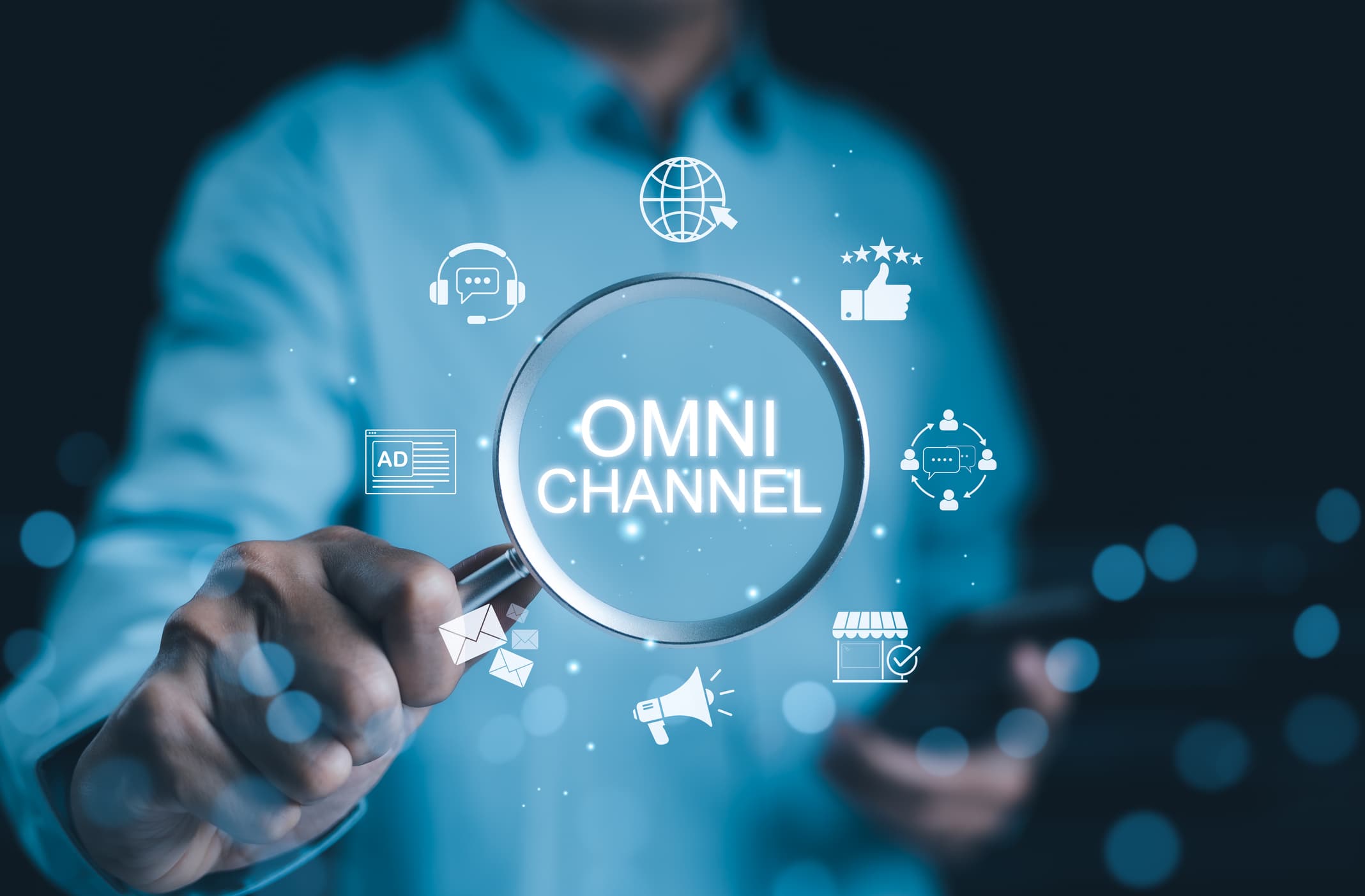
Customers today move seamlessly between online shops, apps, social media, and physical stores. Successful loyalty programs connect all these channels into one cohesive experience. Points, status levels, and benefits are accessible everywhere, regardless of where the interaction happens. An app shows the current point balance, the receipt syncs the in-store purchase, and the email campaign taps into current preferences. This omnichannel loyalty creates the consistency that customers expect and makes brands tangible across all channels. The more data streams from all channels converge, the more precise personalization becomes. Offers are no longer random, but based on specific signals — purchase history, interests, timing, and location. Communication feels less like marketing and more like genuine service.
Integration with CRM and Marketing Automation
The true strength of modern loyalty programs lies in their integration. CRM systems store customer profiles and purchase histories, while marketing automation triggers the right actions.A customer reaches a new status level? The automation system immediately sends a personalized message, updates segments, and notifies the sales team. New data points are instantly fed back into the CRM.This creates a closed loop of insights, responses, and optimization.Such integration makes loyalty programs more efficient, consistent, and scalable. It enables a form of customer retention that’s based on relevance and powered by data, reinforcing the brand in every interaction.Integrated loyalty management combines data, technology, and communication into a central control unit that keeps the customer experience consistent across all channels.
Challenges and Success Factors
Loyalty programs are among the most powerful — but also most complex — tools in marketing. Their success depends less on the tool itself and more on strategy, data quality, and consistent execution.Lack of structure or overly complicated processes can quickly reduce a program’s effectiveness.
Common Pitfalls
One frequent mistake is overcomplexity. When programs have too many rules, tiers, or exceptions, customers no longer understand the value. The effort outweighs the perceived benefit, and participation drops.A second risk is poor data quality. Without a clean, consistent, and up-to-date data foundation, any personalization remains superficial. Incomplete or duplicate records lead to incorrect targeting and imprecise communication.🔗 Learn more about modern customer data management on our introductory page.A third weak point is lack of relevance. If rewards or content don’t match the user’s behavior or interests, the program quickly becomes irrelevant. Loyalty only emerges when customers feel understood and valued.
Success Factors
Successful loyalty programs start with a clear definition of goals. Companies need to know whether they prioritize repeat purchases, data depth, or brand engagement. Only then can an appropriate structure be developed.A second success factor is a simple user experience. Enrolling, collecting, and redeeming should work intuitively, across all channels. The best programs are self-explanatory and deliver clear value without extra effort.Third, continuous optimization is essential for long-term success. Loyalty is not a static project but a learning system. Regular analysis, A/B testing, and feedback loops ensure that content and mechanisms remain relevant.Companies that implement these factors consistently build programs that not only retain customers but also actively drive value creation.
Conclusion: Why Loyalty Programs Are Strategically Essential in 2025
Customer loyalty is not a coincidence — and not a byproduct of good products. It’s the result of intentional systems that combine data, technology, and relationship management.Loyalty programs form the foundation for this — not as a marketing campaign, but as strategic infrastructure for modern customer relationships.Companies that understand loyalty see more than just points and rewards. They use it as a data source, a control mechanism, and a constant touchpoint between brand and customer. This transforms every interaction into insight — and insight into measurable success.
💡 Tip: At DEFACTO, we develop loyalty strategies tailored to your starting point, your industry, and your business goals. Our experts combine strategic know-how with technological expertise and support you from analysis through to integration into your existing MarTech ecosystem.Technologically, the DEFACTO Loyalty Engine forms the backbone of efficient loyalty management. It integrates data, processes, and automation into a central platform — enabling measurable customer loyalty at the enterprise level.What results is not just a single program, but a loyalty architecture tailored to your business. Internally, we create operational excellence through clear processes and efficient data use. Externally, we craft a customer experience that delivers relevance and excitement — directly impacting revenue and brand strength.
Get advice now
Sources
- Reichheld, F. and Sasser, W. (1990): Zero Defects: Quality Comes to Services, Harvard Business Review, Sept–Oct 1990, pp. 105–111.